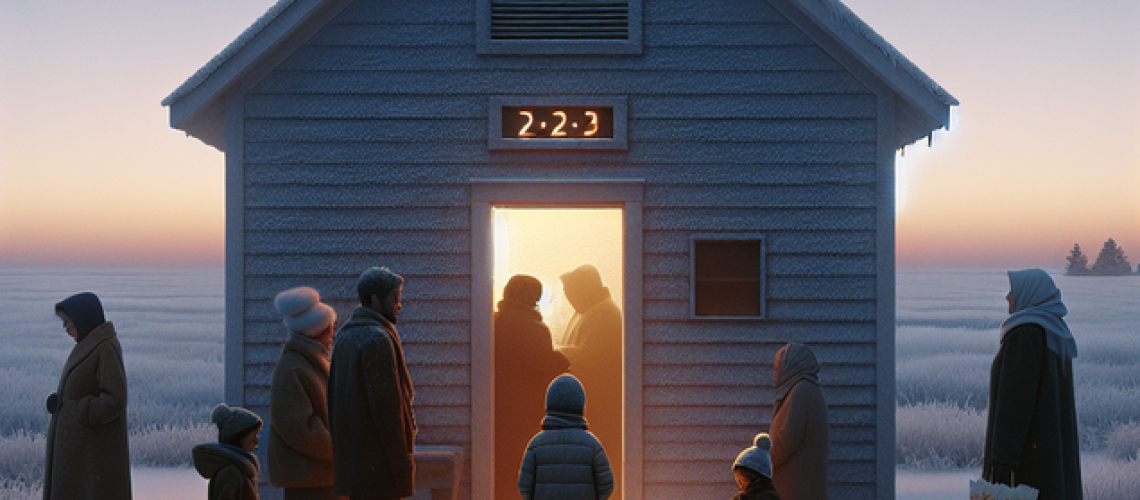

On a winter night in Saskatoon, as the wind sweeps across the prairie streets, a small crowd trickles into a hall tucked behind a local café. Inside, folding chairs form imperfect rows, and the scent of popcorn hovers in the warm air. This is no ordinary screening — it’s a gathering of the Homegrown Cinema Club, a grassroots film collective bringing underrepresented Prairie voices to life on the screen. Founded by a group of Saskatchewan storytellers and filmmakers, this rotating pop-up cinema offers more than just films; it provides a mirror for communities long left out of Canada’s centralized cultural narrative.
“Everywhere we turned, the answer was ‘go to Toronto,’” says Renée Cardinal, one of the club’s co-founders and a Métis filmmaker whose short documentaries focus on intergenerational care. “But our stories are right here. We don’t want to have to leave home to be seen.” These words echo through the work of the club, which showcases films made in and about Saskatchewan, especially those that center Indigenous, newcomer, queer, and rural perspectives. In a province where cultural funding often funnels into urban centres or eastern provinces, Homegrown Cinema pushes back with a projector and a folding table.
It’s not just the art that’s homegrown — it’s the community too. In between screenings, you’ll hear laughter, kids chasing each other between seats, and elders chatting with filmmakers over tea. For newcomers like Ahmad, who arrived in Canada three years ago and only recently moved to Saskatoon from Regina, the club’s screenings are a way to make sense of this place. “I saw a film about a Syrian farmer who started beekeeping in Tisdale,” he says, “and I thought — maybe I can do that here too.” These stories, stitched together with care and local context, become handrails for newcomers navigating unfamiliar ground.
As Saskatoon steadily transforms — with high-rises reshaping the skyline and city centres hollowing out — cultural spaces like Homegrown have become rare, vital sanctuaries. Their nomadic nature is part necessity and part statement. “We reject the idea that art needs a fixed institution or a glittery gala,” says co-organizer Taylor Morin, a Two-Spirit playwright and filmmaker. “Resistance looks like serving bannock at your film premiere. It looks like a child falling asleep in their kokum’s lap halfway through the credits.” The club’s portability becomes a strategy of reclamation: bringing art to communities, not waiting for communities to come to art.
In the glow of a hallway projector and the rustle of borrowed chairs, Prairie residents are reclaiming the screen. What starts as a film night becomes a practice in self-definition, a quiet rebellion against cultural erasure. Homegrown Cinema reminds us that beneath every policy on regional funding or media centralization lies a person yearning for a story that sounds like their own. And in Saskatchewan, under the wide rural sky, they are no longer waiting for permission — they are rolling tape.