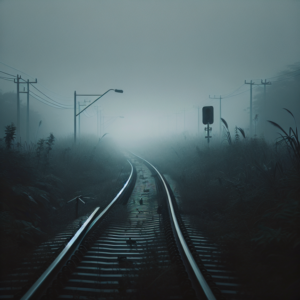


There’s a peculiar stillness that settles over unfinished public works, like the suspended breath of a city too polite to scream. The Crosstown LRT in Toronto—not yet running, not quite absent—has become a ghostly emblem of our age’s deferred promises. A train silently waiting somewhere beneath our feet, echoing questions louder than any announcement: How did we get here? Who gets to decide when the future arrives—or if it ever truly does?
We often think of infrastructure as utilitarian: tracks, concrete, signal lights, and schedules. But infrastructure is also narrative—it tells us what we believe about time, common purpose, and belonging. The impasse of projects like the Crosstown is more than a budgetary failure or an administrative headache. It is a philosophical rupture, a failure to steward collective time. When public things cease to move, so too does part of the social imagination.
Behind these eternally-expected trains lies a deeper unease. Decisions about infrastructure echo with the priorities of invisible hands—contracts hidden from public view, private gains dressed up as civic virtue. The problem isn’t merely incompetence; it is estrangement. We are passengers with no agency, beholden to interests we did not elect and timeframes we do not control. Is this still democracy, or only the stage upon which it performs?
The delay of the LRT is not just about transit—it is a meditation on power. It forces a stark contrast between politics fixated on polls and the moral call to care across generations. Where is the ethic of maintenance, the reverence for continuity? We are governed by men obsessed with quarterly optics, while the long-term arcs of justice and equity rust quietly beneath their feet.
Perhaps the question is not when the train will arrive, but who deemed themselves its owners in the first place. As we stand beside empty tracks, let us not wait passively. The republic is made not only by votes, but by the insistence that time itself is a shared good. To reclaim meaning, we must reclaim the rhythm of the collective—slow, deliberate, and destined for somewhere better.