
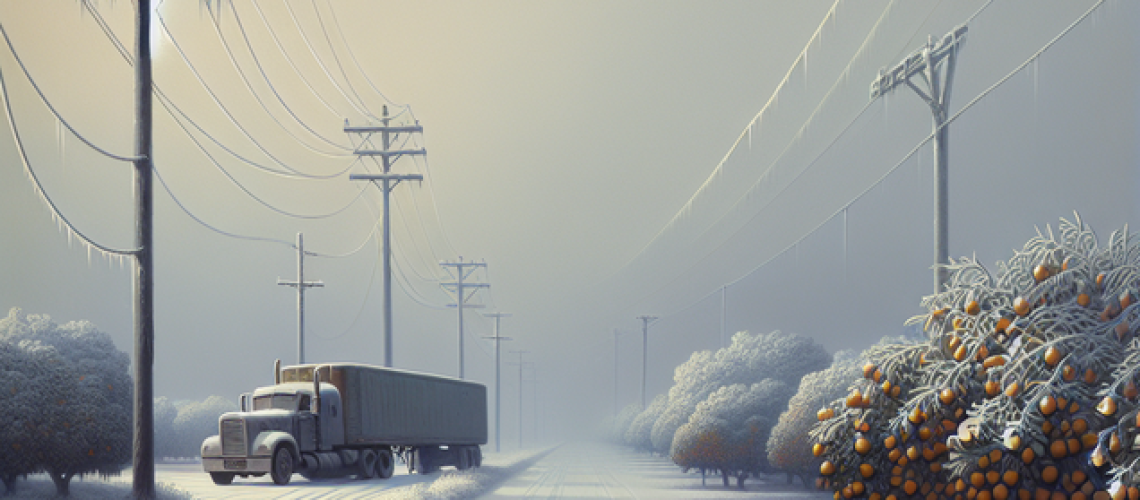

Earlier this week, a powerful winter storm swept across the southern United States, bringing rare snowfall, cancelled flights, and devastated fields of citrus crops. As unusual as it seemed, events like these are quickly becoming less the exception and more an emerging rule in our climate-disrupted world. According to NOAA, the frequency of extreme weather events in North America has more than doubled since 1980. What we witnessed, then, is not just a storm—it’s a signal. These meteorological anomalies are not isolated accidents of nature; they are early warnings of a new climate normal, with profound implications for the economy.
One of the most immediate and tangible effects of this storm was on agriculture. Texas’s citrus industry—already stressed from previous droughts—faced severe losses as freezing temperatures wiped out parts of the upcoming harvest. As with similar weather events in California and the Midwest, the pattern is clear: instability breeds scarcity. And scarcity drives up prices. The USDA has noted that climate-related disruptions are now a key contributor to food inflation. When crops fail or supply chains freeze—literally—consumers thousands of kilometres away feel it on their grocery bills.
But beyond crops and costs, the storm exposed deeper cracks in U.S. infrastructure. Power grids buckled under pressure, and key transportation links, from highways to regional airports, were paralyzed. Many of these vulnerabilities stem from decades of underinvestment and a privatization bias in critical services that prioritize cost-efficiency over climate resilience. In Texas, a deregulated energy market failed once again to protect both producers and consumers, a scenario recalling the deadly freeze of 2021. It’s a sobering reminder that when profit motives lead the design of public infrastructure, society bears the cost at the worst possible time.
The knock-on effects of such climate shocks ripple far beyond state lines. Retail distribution slowed, transportation bottlenecks formed, and logistics networks stumbled—some of which directly affect the Canadian market. Already we’ve seen how lumber, produce, and fuel prices are increasingly tied to climate volatility. Economists now track what they call ‘climate inflation’—a sector-specific price squeeze exacerbated by weather extremes. For Canada, this underlines a crucial policy imperative: we cannot assume our cooler latitude inoculates us from U.S. climate fallout. What happens in Texas today affects Toronto’s shelves tomorrow.
So, what do we do? Waiting for silver-bullet technologies or green overhauls won’t cut it. We need pragmatic, evidence-based adaptation strategies—from robust, climate-proofed infrastructure to publicly administered emergency supply reserves. Recent research by the Canadian Climate Institute highlights that every dollar invested in resilience saves up to $6 in future losses. In other words, empathy for those hit today must translate into smart planning for those who could be next. If southern U.S. storms are the canary in the coal mine, we should be building exits, not excuses.