
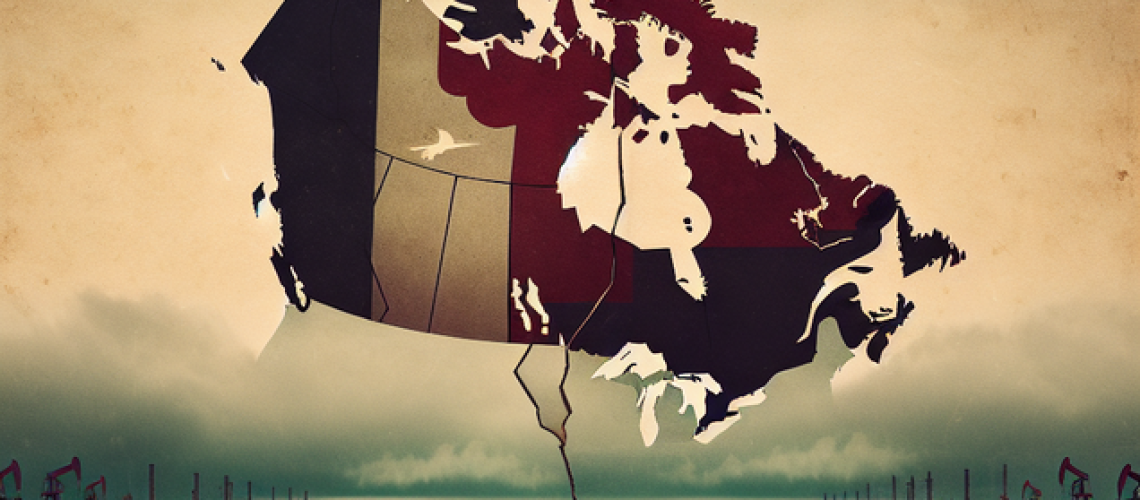

If you blinked, you might’ve missed it: a reported sit-down between Alberta separatists and U.S. officials that reads more like a political thriller than standard provincial discontent. According to recent revelations, an Alberta-based group advocating for secession held clandestine meetings south of the border, supposedly to court American recognition for a breakaway state. It’s not every Tuesday that the quiet architecture of democracy is rattled by whispers of secession vetted in a foreign capital. But here we are — and the silence from some quarters is louder than any protest.
British Columbia Premier David Eby didn’t wait to set the tone: he called the episode “close to treason,” blasting the notion that private players can casually toss around sovereignty over coffee with a foreign power. Meanwhile, federal Conservative leader Pierre Poilievre played the mute, offering no condemnation — no reassurance either — leaving critics to speculate just how much of Canada’s right wing is nudging up to nationalist flirtation. It’s a scenario that leaves the rest of us holding our breath, not just for Alberta’s political future, but for democracy’s fragility in an age of algorithmic populism.
Cross-border seduction is not new. Ask Catalonia’s leaders when they shopped their independence case around Brussels, or New Caledonia’s push to shake French rule by mobilizing international opinion. What changes the stakes here is the proximity and power of the U.S., a neighbor not just geographically but economically and culturally — whose endorsement, tacit or otherwise, could transform Canada’s centripetal spiral into something far more irreversible. In the Global South, such movements are often flagged as security risks and crushed. But in the West, there’s often the luxury of romanticizing sedition — if it plays into someone else’s long game.
As a journalist whose roots trace the fault lines of post-colonial nationhood, I find the Alberta episode curiously familiar. States with extractive economies — Algeria, Venezuela, now Alberta — drift easily into political identity crises when energy prices rise, fall, or get regulated. Suddenly, the federal state becomes the villain, and borders become bargaining chips. It’s not sovereignty that’s under siege — it’s solidarity. The deeper concern here isn’t just political; it’s philosophical: who gets to redraw the lines, and who holds the permanent marker?
We need more than partisan finger-pointing. We need transparency. Who was in that room? What was discussed? And why is a conversation about dissolving part of Canada being held off Canadian soil? Foreign intervention isn’t just a specter lurking in hotspots like Sudan or Taiwan — it’s been quietly invited through the backdoor of Calgary’s rogue politics. If democracy has any defense left, it lies in calling this what it is: not a side note, but a test of national coherence. The question isn’t whether Alberta can go — it’s whether we let alliances across borders do the pushing.